How to Choose the Right Dysphagia Cup: A Guide to Your Options
Understand how different cups support sip control, posture, and grip.
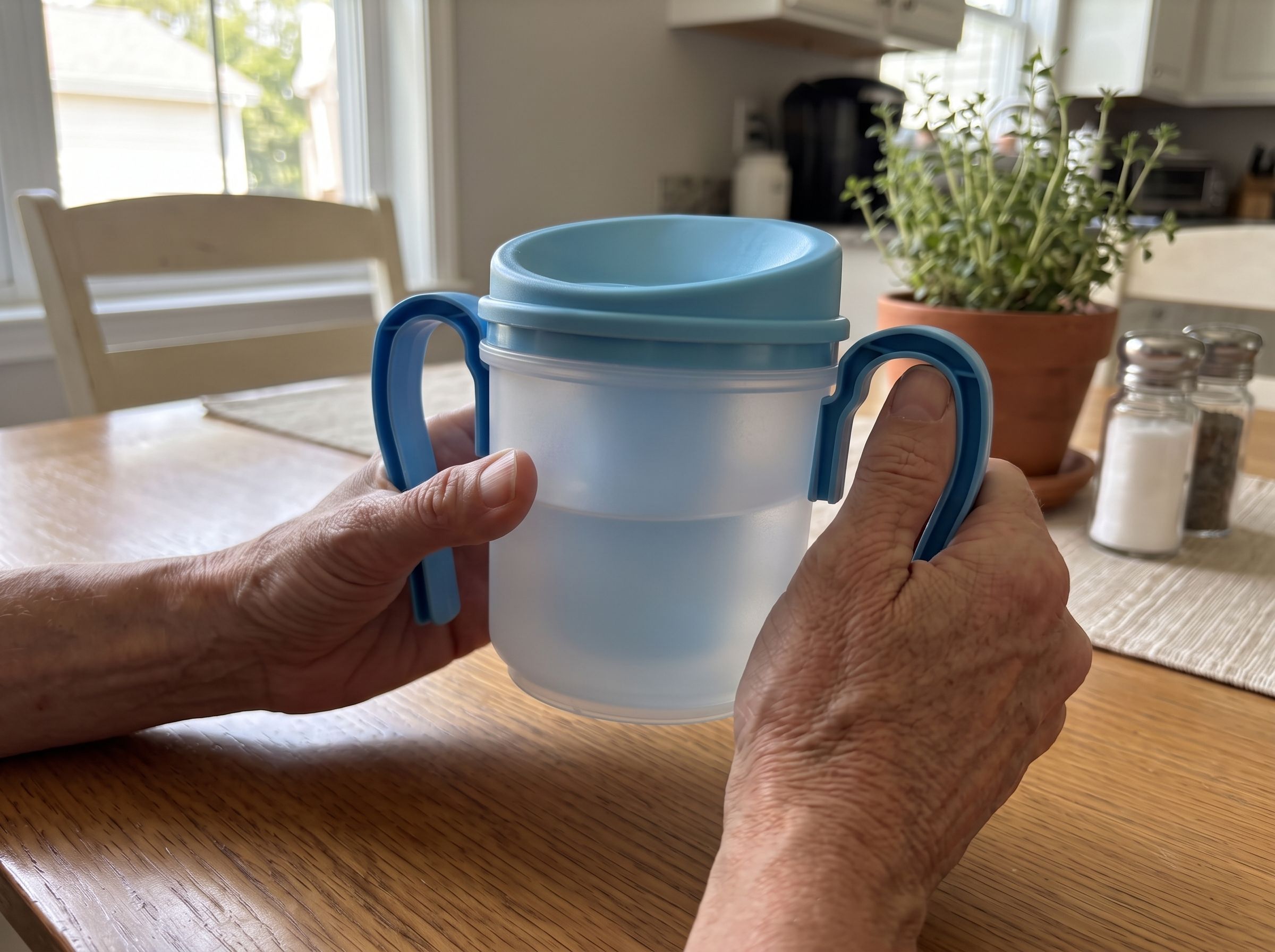
Choosing a cup may sound like a small thing. For someone with dysphagia, it can be the difference between drinking safely and not drinking at all. Here is a clear guide to your options.
The main types of dysphagia cups
Regulating, or metered, cups limit each sip to a small, fixed amount. They are the safest choice for people who take in too much when they gulp. The Provale Cup delivers a measured 5cc or 10cc per drinking motion with an anti-suck flow.
Often called “nosey” cups, these feature a cutout that accommodates the nose, allowing the drinker to remain upright rather than tipping the head back, which may be unsafe for some people. These cups help support posture, but they do not control the amount of liquid delivered with each sip.
Weighted and two-handled cups can provide added stability for people with tremors or a weak grip. While they can make holding and drinking easier, they do not control the volume of each sip or the swallow itself.
Match the cup to the problem
If the issue is swallowing large, uncontrolled sips, you want a regulating cup that caps each sip. If the issue is posture or the use of a compensatory strategy such as a chin forward position, a nosey cup helps. If the issue is tremor or grip strength, a weighted or dual-handled cup helps. Here is the advantage of the Provale Cup: it does all three. It combines metered flow with a large nose cut-out, so you can keep your chin forward without tipping your head back, dual handles for stability, and a transparent base so caregivers can keep an eye on intake. One cup covers volume, posture, and grip at once.
What makes a cup trustworthy
Look for a dysphagia tool with FDA registration, a proven clinical track record, and a design that has been successful in care settings. The Provale Cup has been recommended by speech-language pathologists for over 25 years, was designed with input from hundreds of SLPs, and is made in the USA.
The bottom line
If the core problem is taking in too much liquid at once, which is a common reason thin liquids become unsafe when you have dysphagia, a regulating cup is often the right place to start, and may be an alternative to thickeners for the right patient. Confirm the fit for your dysphagia needs with your speech-language pathologist.
FAQ
What is the safest cup for dysphagia? For people who have difficulty with large swallows, an SLP may recommend a regulating cup that meters each sip at 5cc or 10cc.
How do I know which type I need? Your SLP matches the cup to your specific swallowing problem after an instrumental assessment.
Find the cup that fits your needs. Shop Provale Related: How the Provale Cup Works, 5cc or 10cc: How to Choose
Have questions about our products? Need help with an order? Looking for dysphagia resources? Our team is happy to help!